Twelve modules. One quiet system.
Each module answers one question a scattered mind keeps losing. Use three, use all twelve — your Nortefy is only as big as your life needs it to be.
Purpose
Why I exist. What I build. How I live.
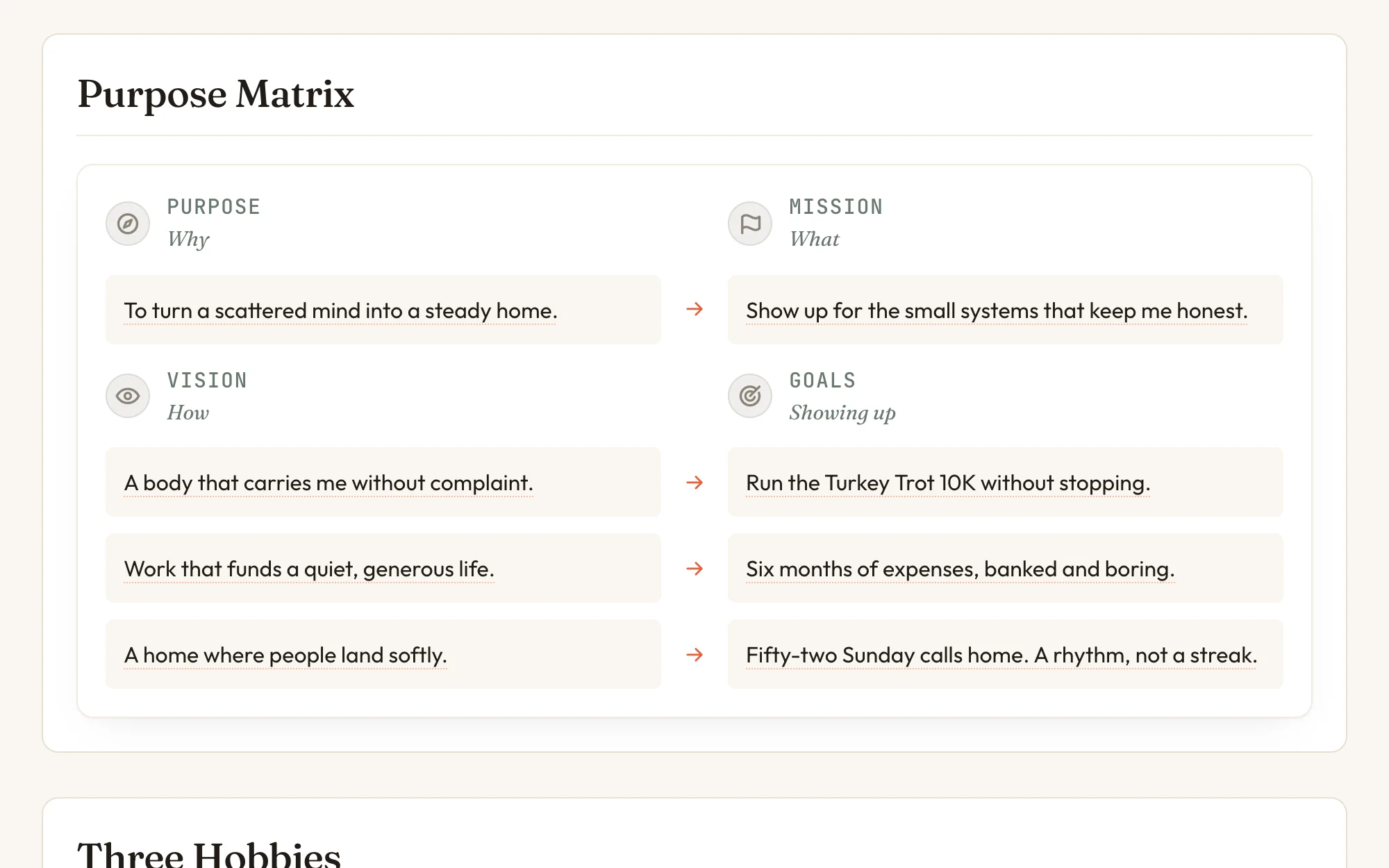
Most alignment systems ask you to remember your purpose. Nortefy keeps it visible.
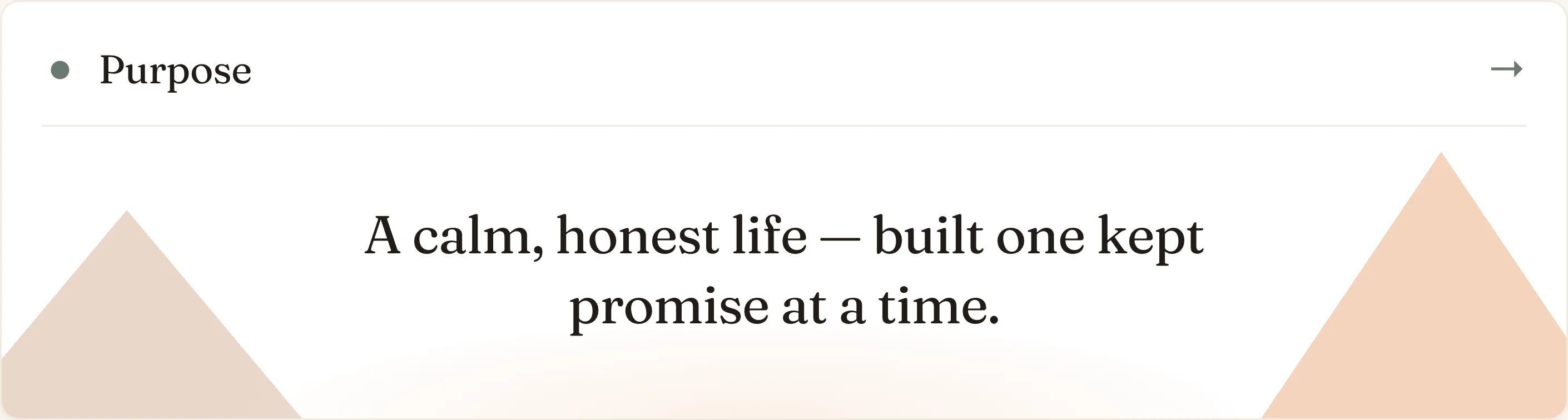
Your Core Principle — the one line that holds everything else — becomes the headline of your dashboard. Below it sit your Mindsets, Daily Anchors, the Purpose Matrix, and Three Hobbies: one for money, one for shape, one for staying creative.
Write it once, return to it when everything feels like noise. A printable sheet puts it somewhere the browser isn’t.
Direction
What I am building — always and this year.
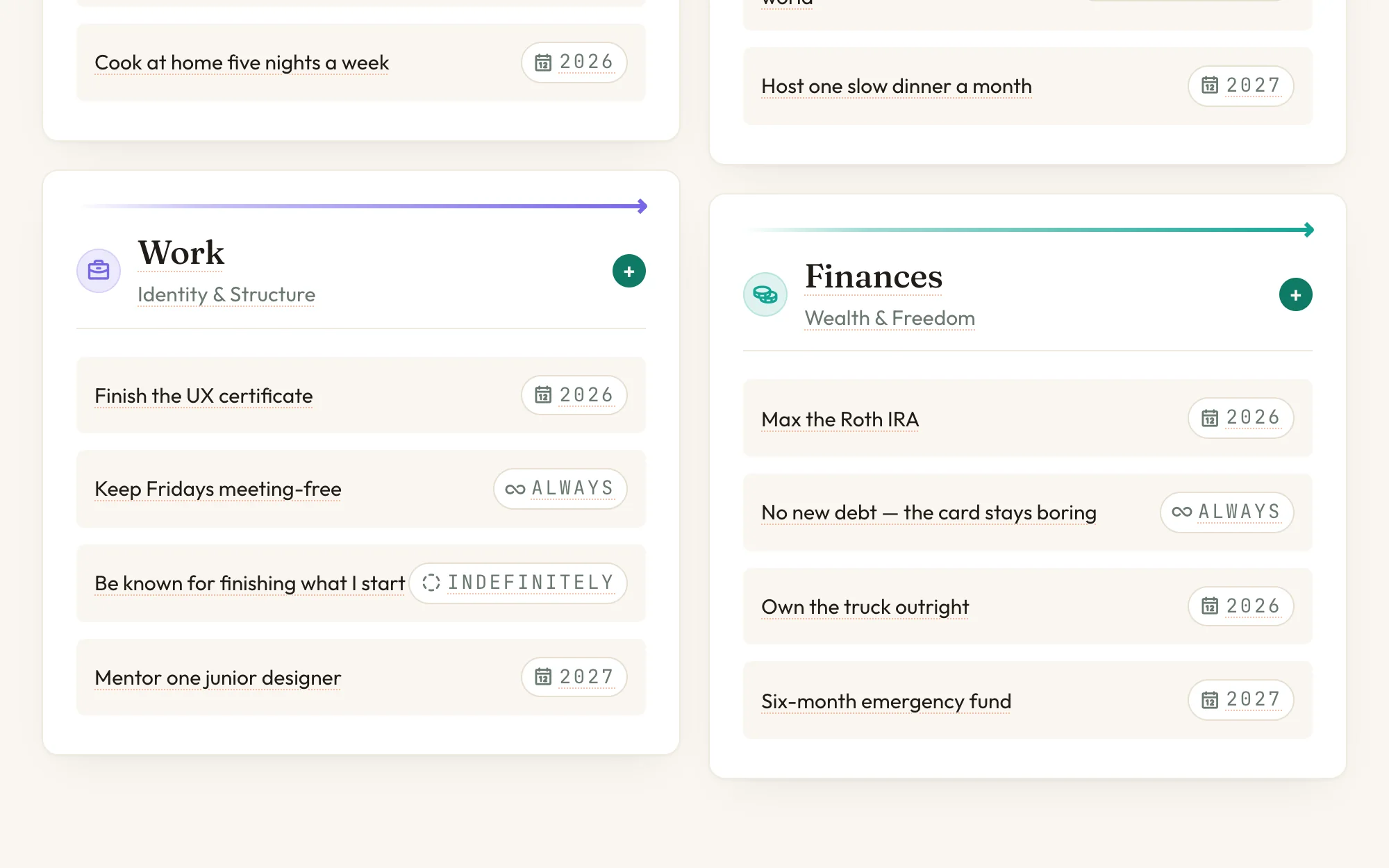
Direction translates purpose into long-horizon commitments and yearly focus — sorted into categories you write yourself, up to seven, with ten items each.
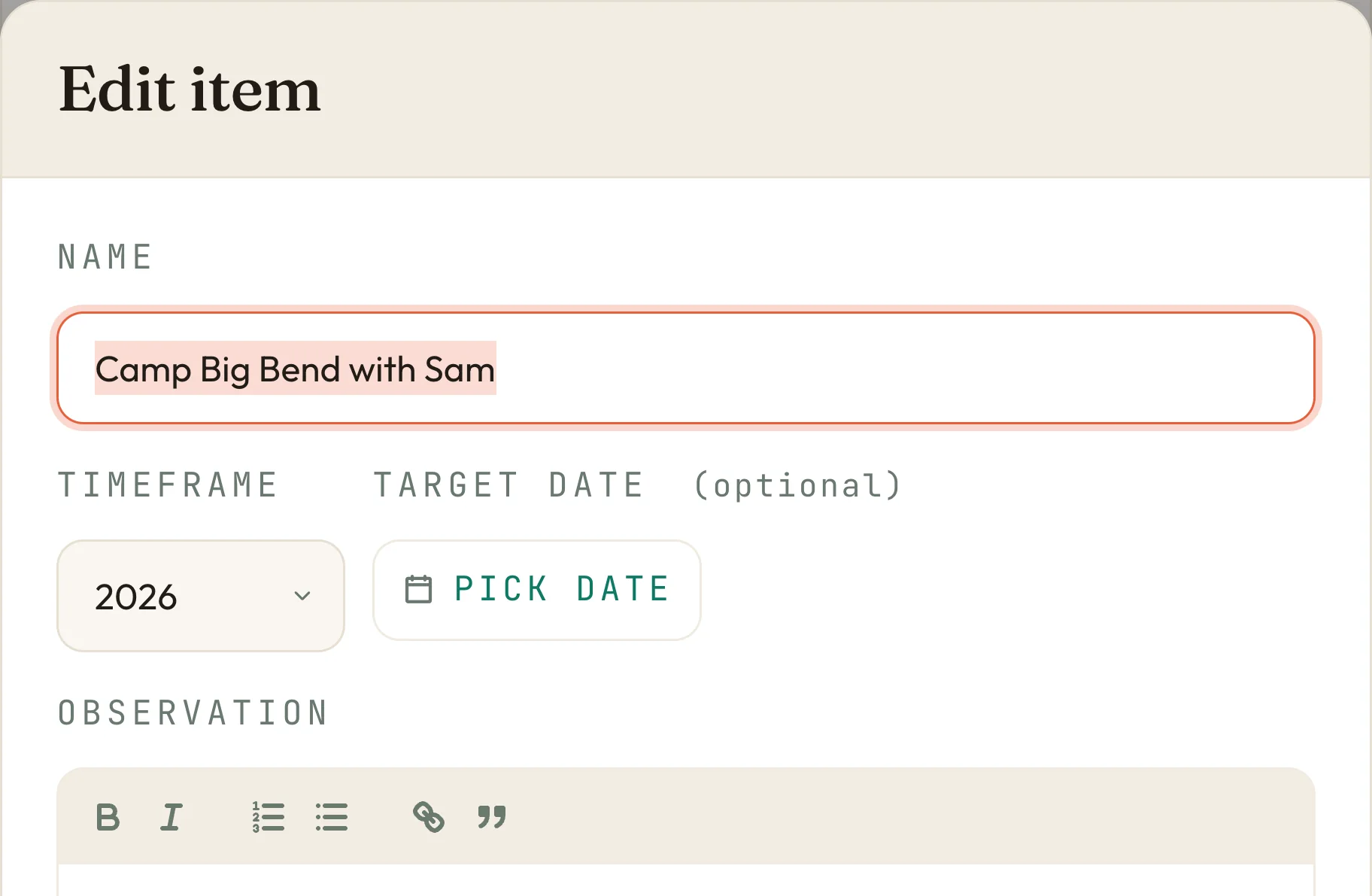
Each item carries a When-tag — a specific year, Always, or Indefinitely — and arranges itself by that tag. At a glance: what belongs to this year, what is life-long, what is quietly waiting.
No sub-tasks, no inbox. The home dashboard resurfaces categories a few at a time — the choosing happens once, the remembering happens automatically.
Planner
What I am doing today.
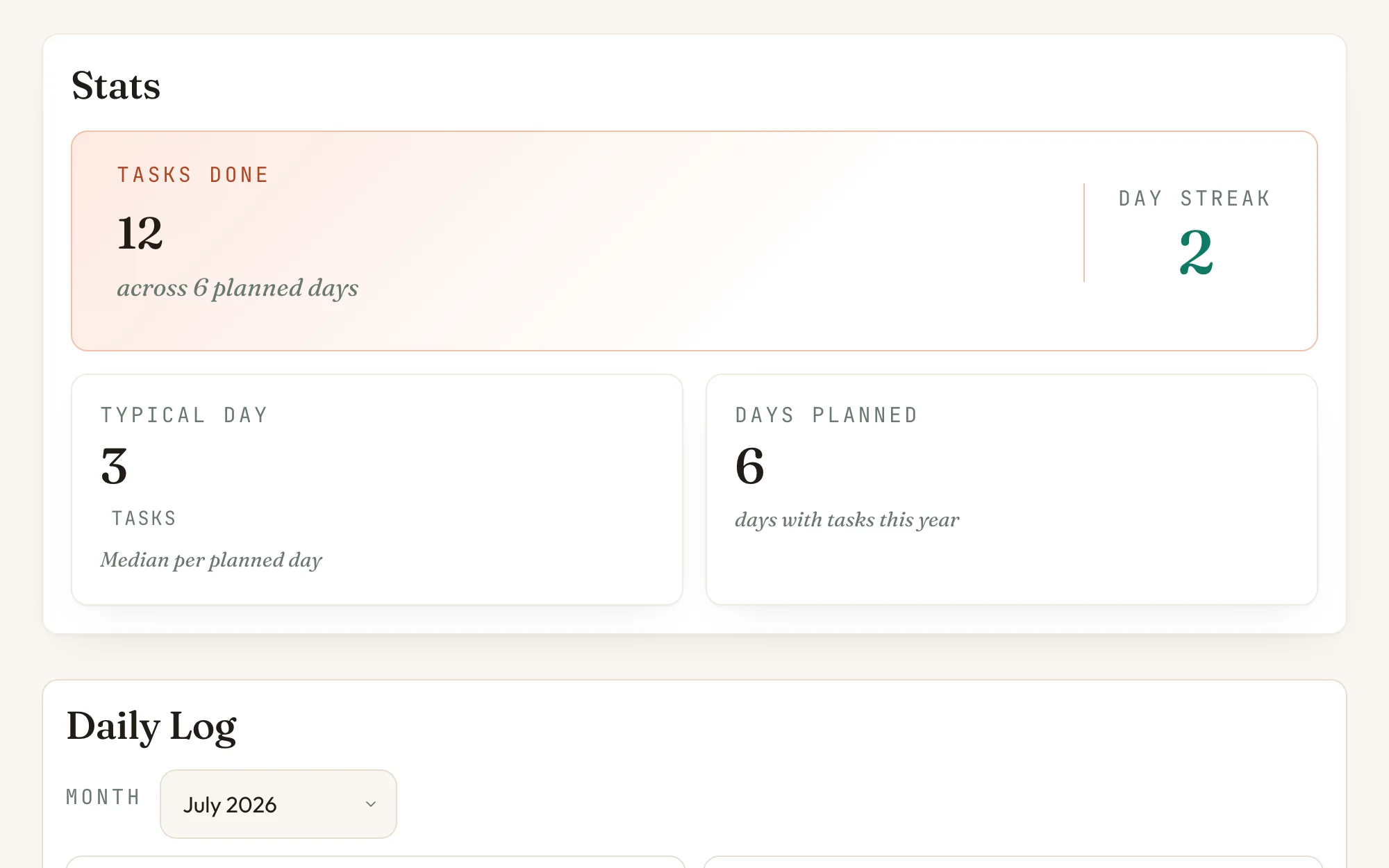
To-do apps rot into backlogs, and a backlog is the enemy of starting. Planner lets the day end.
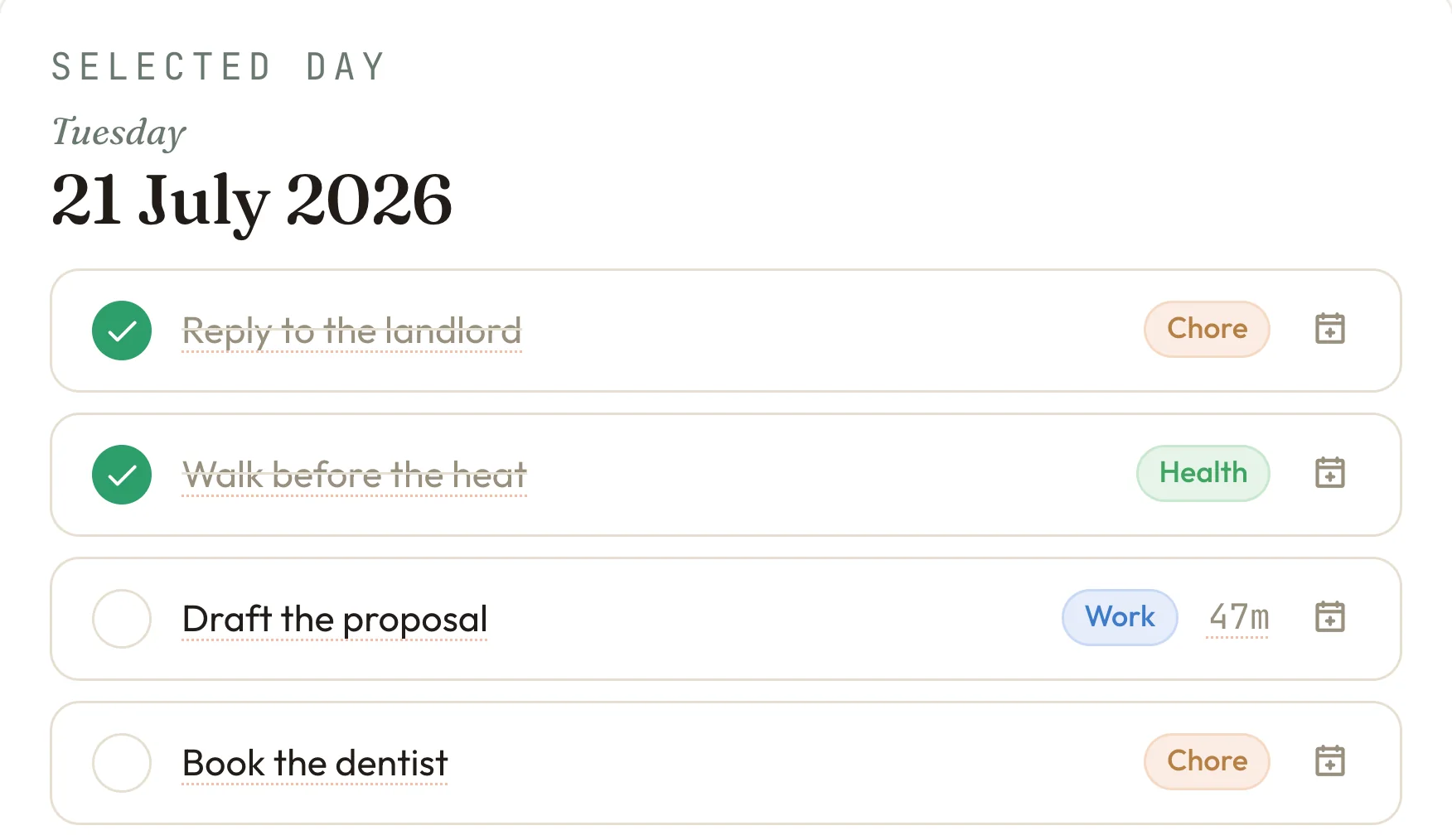
Each morning you write a short list — a handful of steps, not everything you are committed to. Any task can carry a colour-coded label and an optional focus timer.
Nothing rolls over. Unfinished tasks stay in their day, dimmed, never red. The Day Streak counts days you showed up with a plan, not days you finished everything.
Things
What I own. Where it lives.
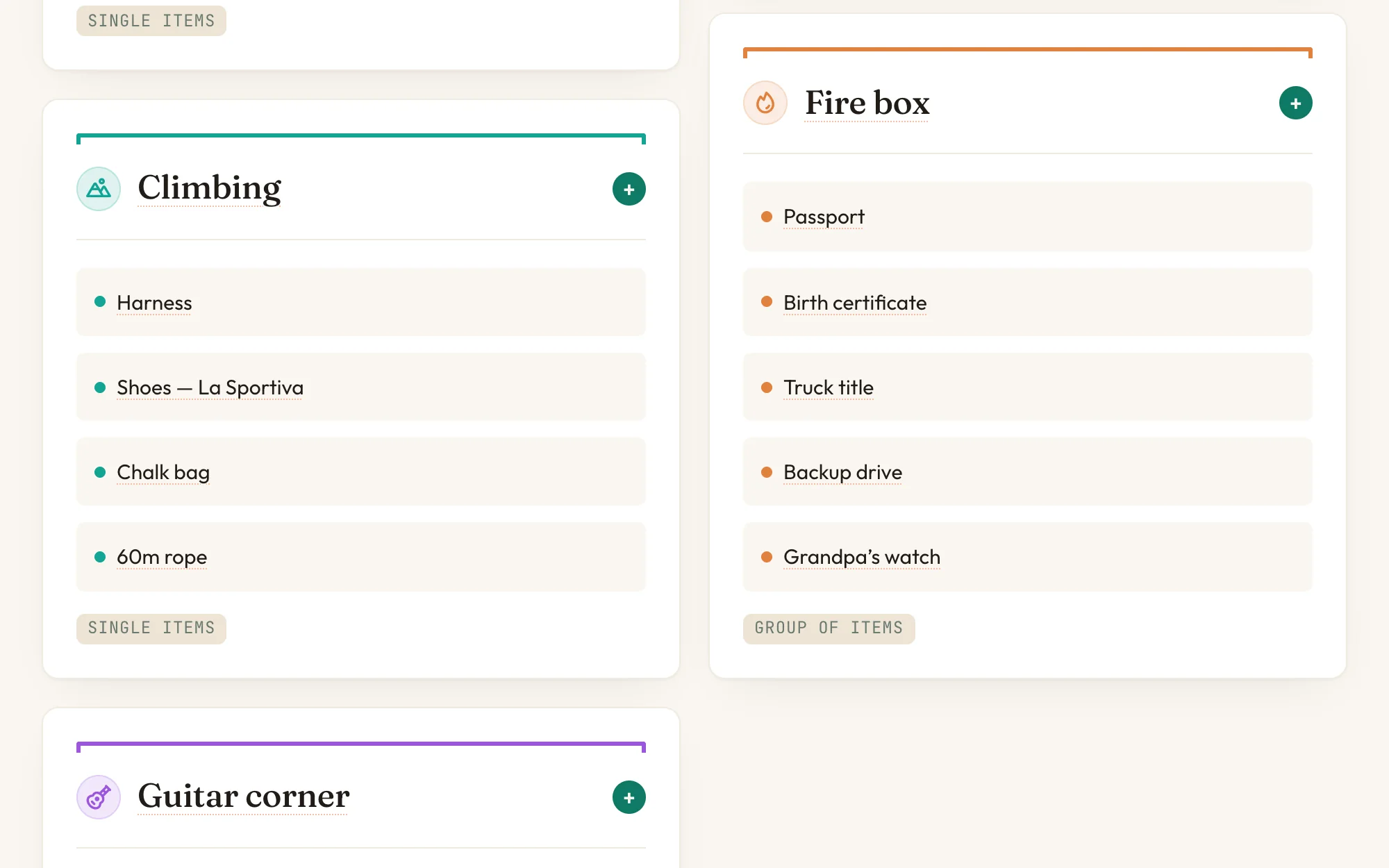
Physical clutter costs a neurodivergent brain working memory. Things converts that open loop into a closed inventory.
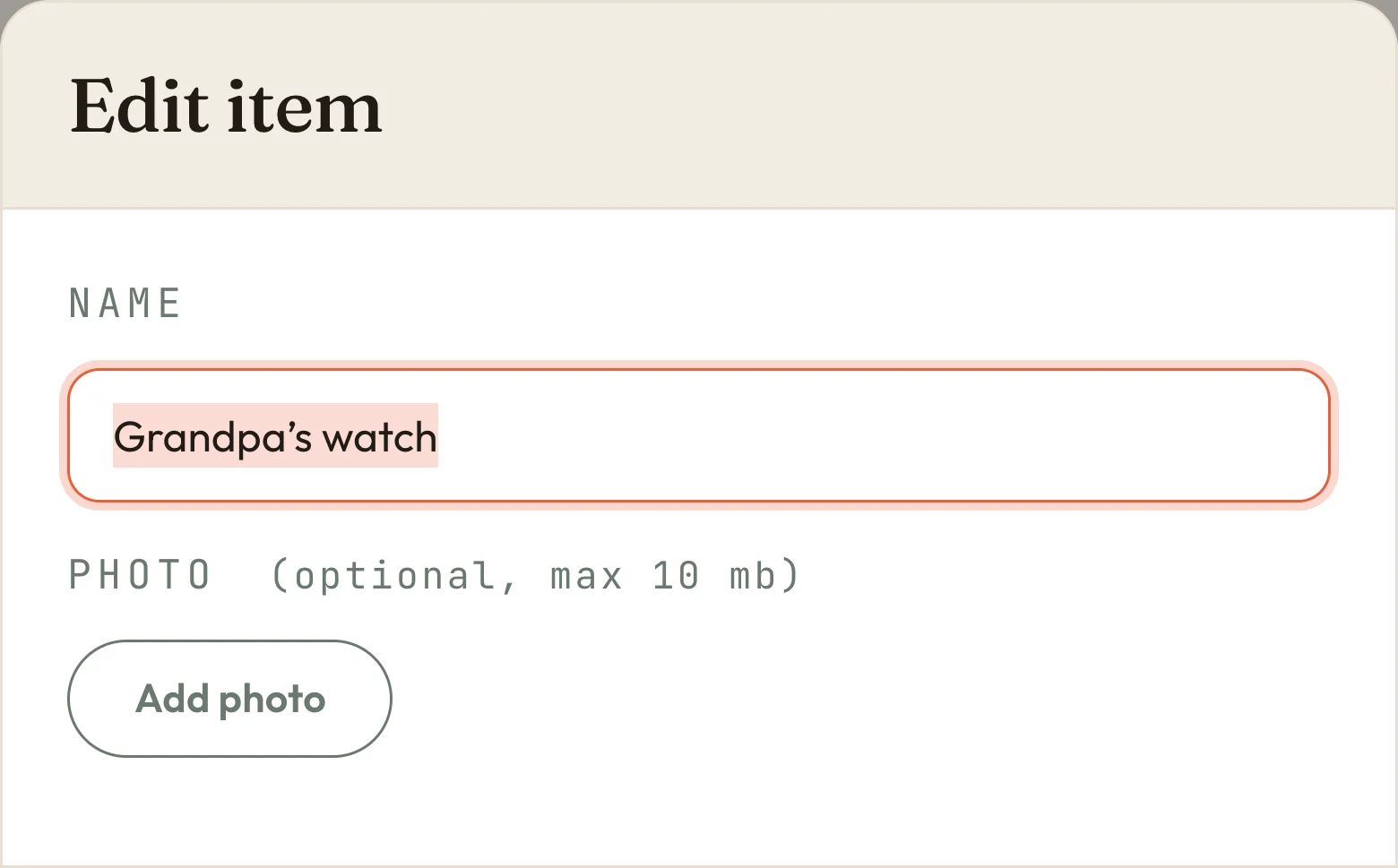
Sort your belongings into categories that fit your life. Each gets an icon, a colour, and a badge for what it holds: single items, groups, or the special ones you’d grab in a fire. Add a photo where seeing it is the point.
No cost tracking, no subscriptions, no reminders. Just a quiet record of what you own.
Pitfalls
The habits I am working to reduce.
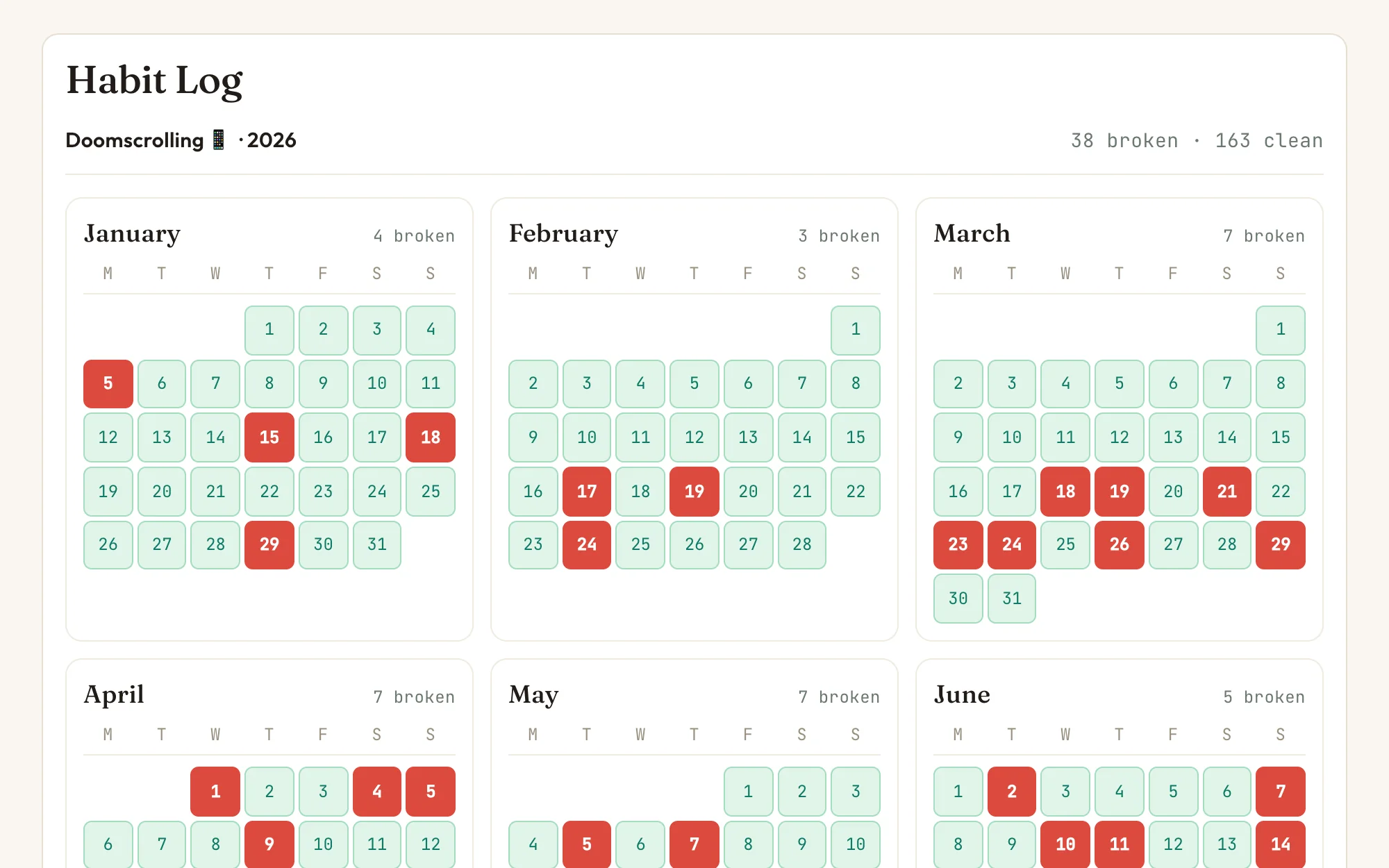
Traditional habit trackers tell you that you failed. Pitfalls just keeps an honest count.
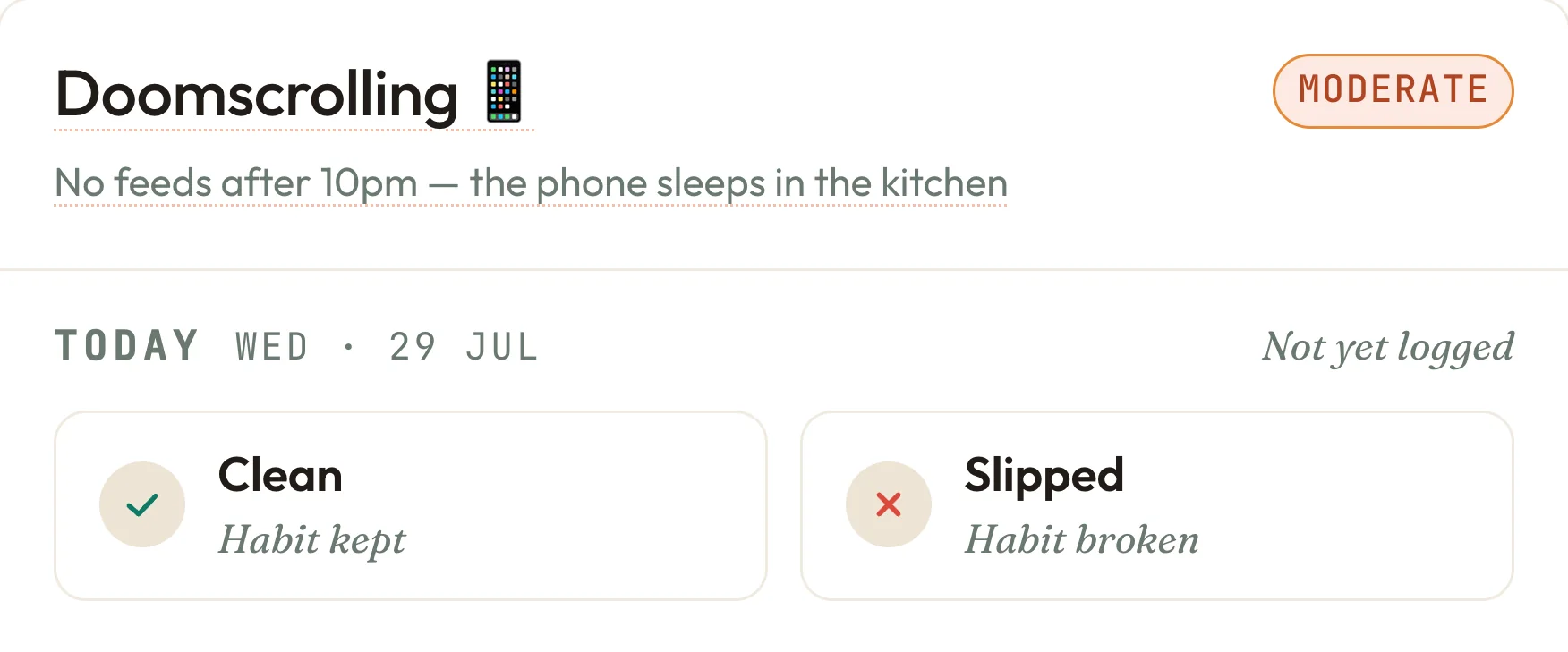
Up to six habits, each with a severity that sets its monthly tolerance. Each day you log Clean, Slipped, or nothing at all; untracked days neither help nor hurt.
This is the difference between shame and information: a hard day is just data, met with the same calm page as a good one.
Sleep
Recovery, made visible.
Sleep debt destroys executive function first — exactly what ADHD and autistic brains have less of to spare.
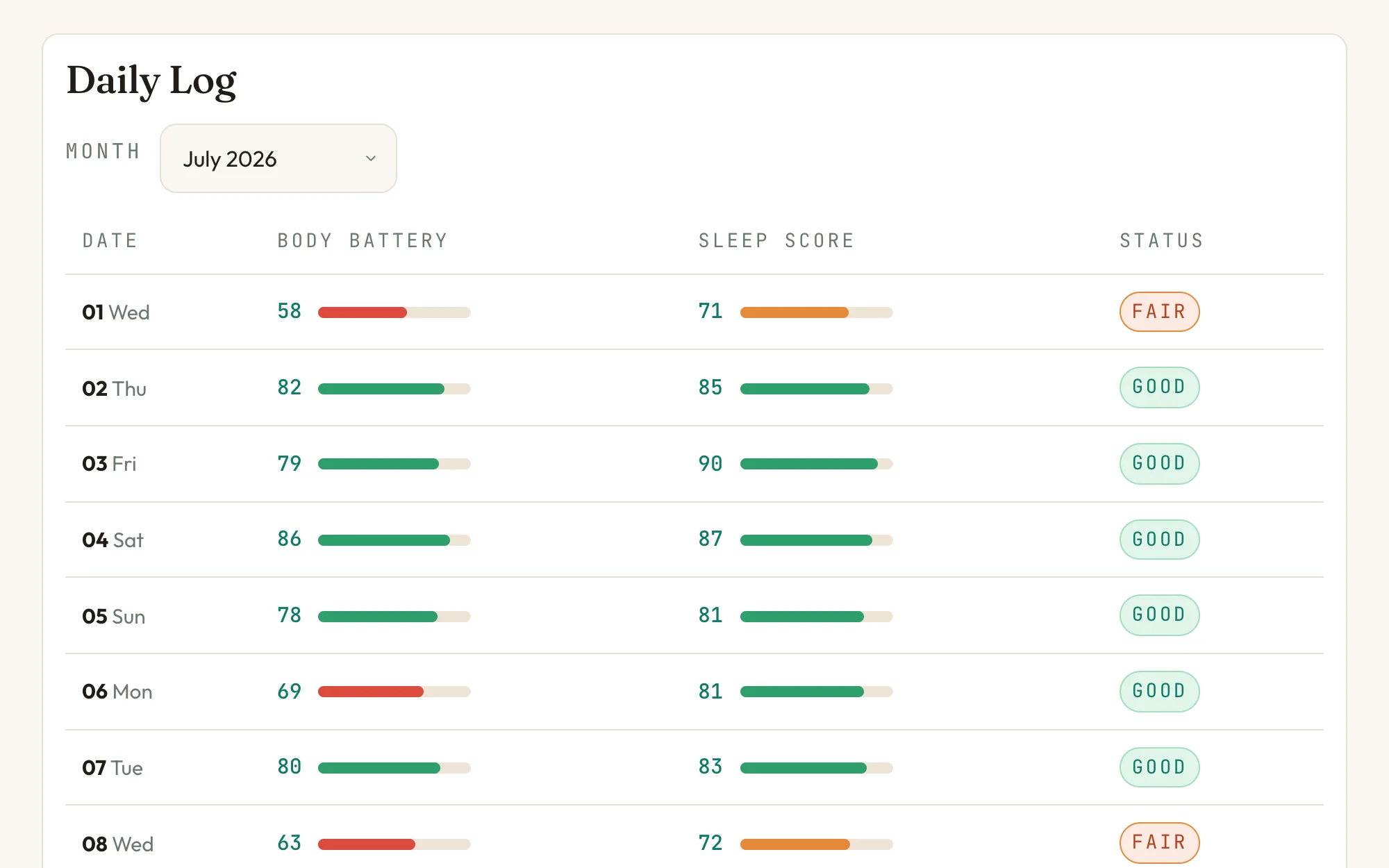
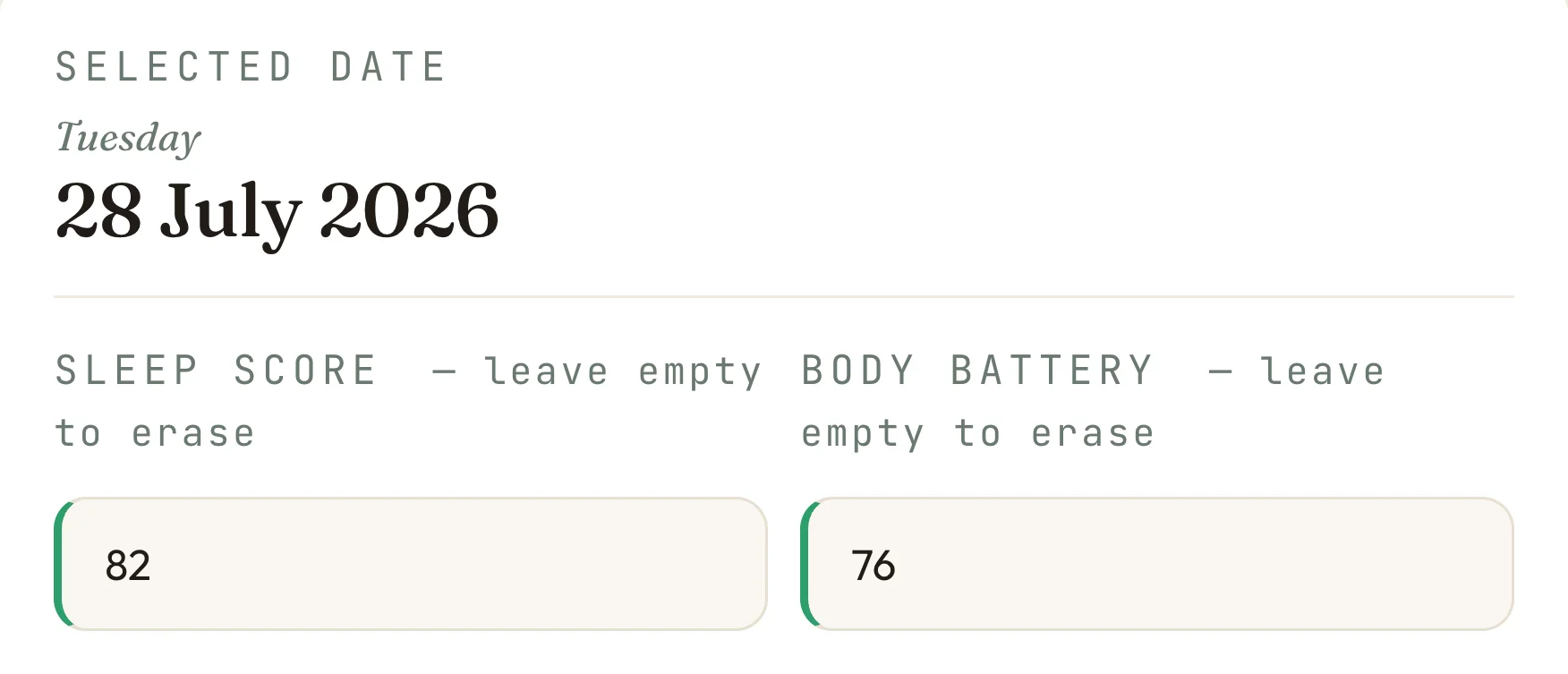
Each morning you log one number: a Sleep Score, 0–100, read off whatever wearable you already use and typed in. No sync, no API, no third-party access to your health data.
Three bands — Good, Fair, Bad — tint every chart on the page. Over time Sleep sits next to Pitfalls and Momentum so the correlation becomes visible: when recovery dips, which habits follow.
Momentum
The behaviors I am trying to build.
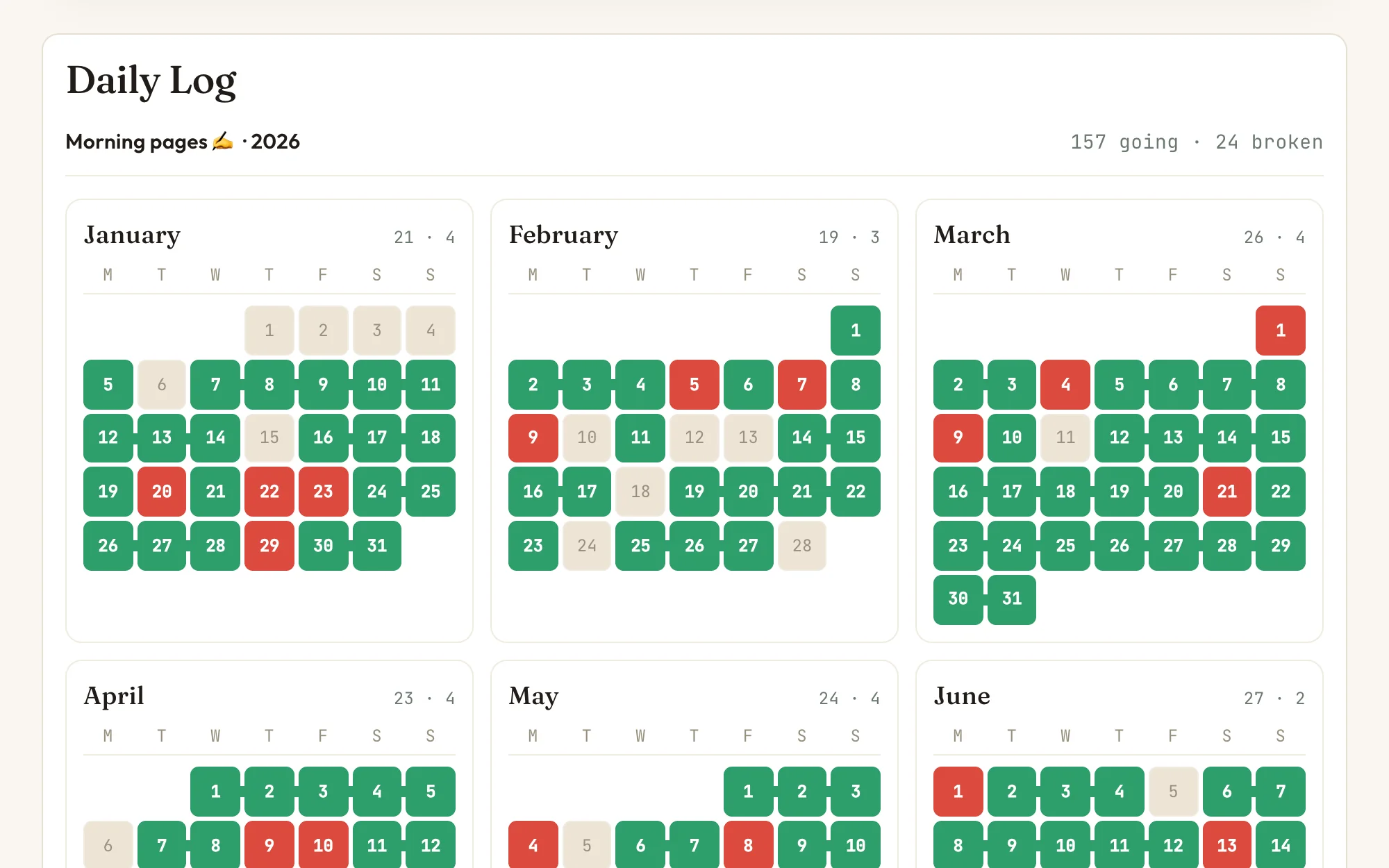
Momentum is the daily record of showing up — Don’t Break the Chain, rebuilt for ADHD.
Each tracker gets a year-long heatmap — accumulating proof that you were there, evidence you can return to on a bad day.
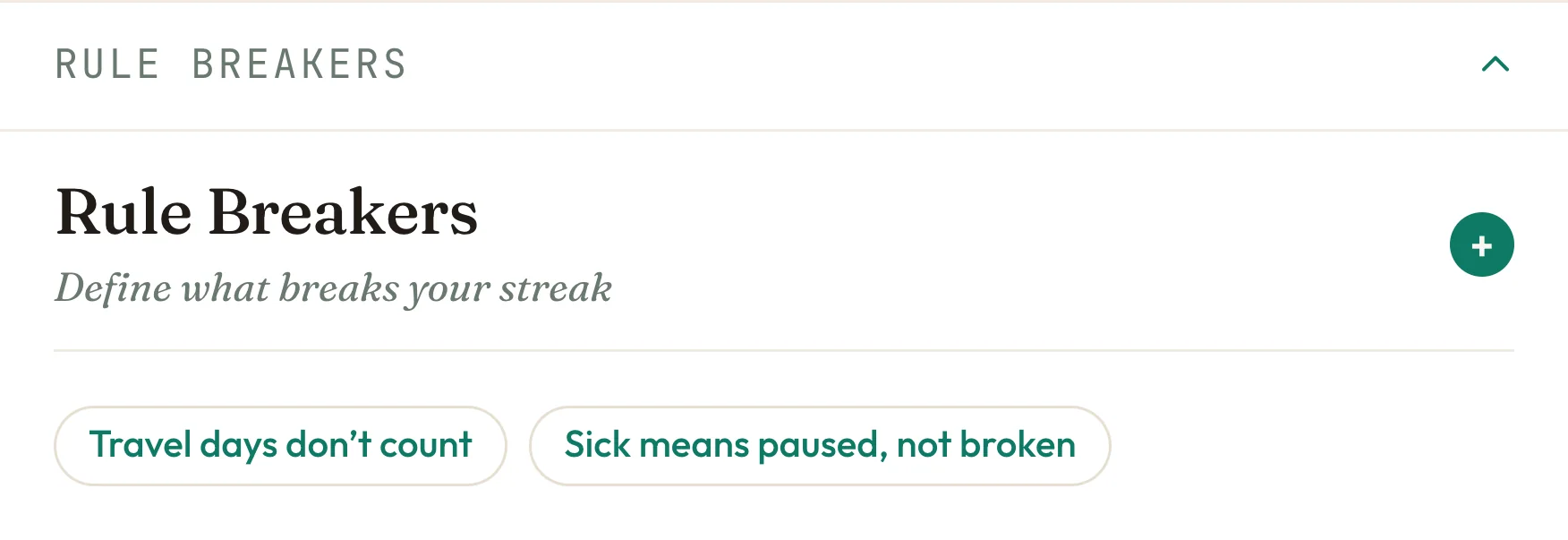
You write the Rule Breakers — up to ten per tracker — so what ends a streak is your call, not the app’s. One Broke day resets the count to zero, deliberately. The year underneath stays whole.
Milestones
The future, made visible.
ADHD time perception collapses the horizon into now and not-now. Milestones rebuilds the middle distance.
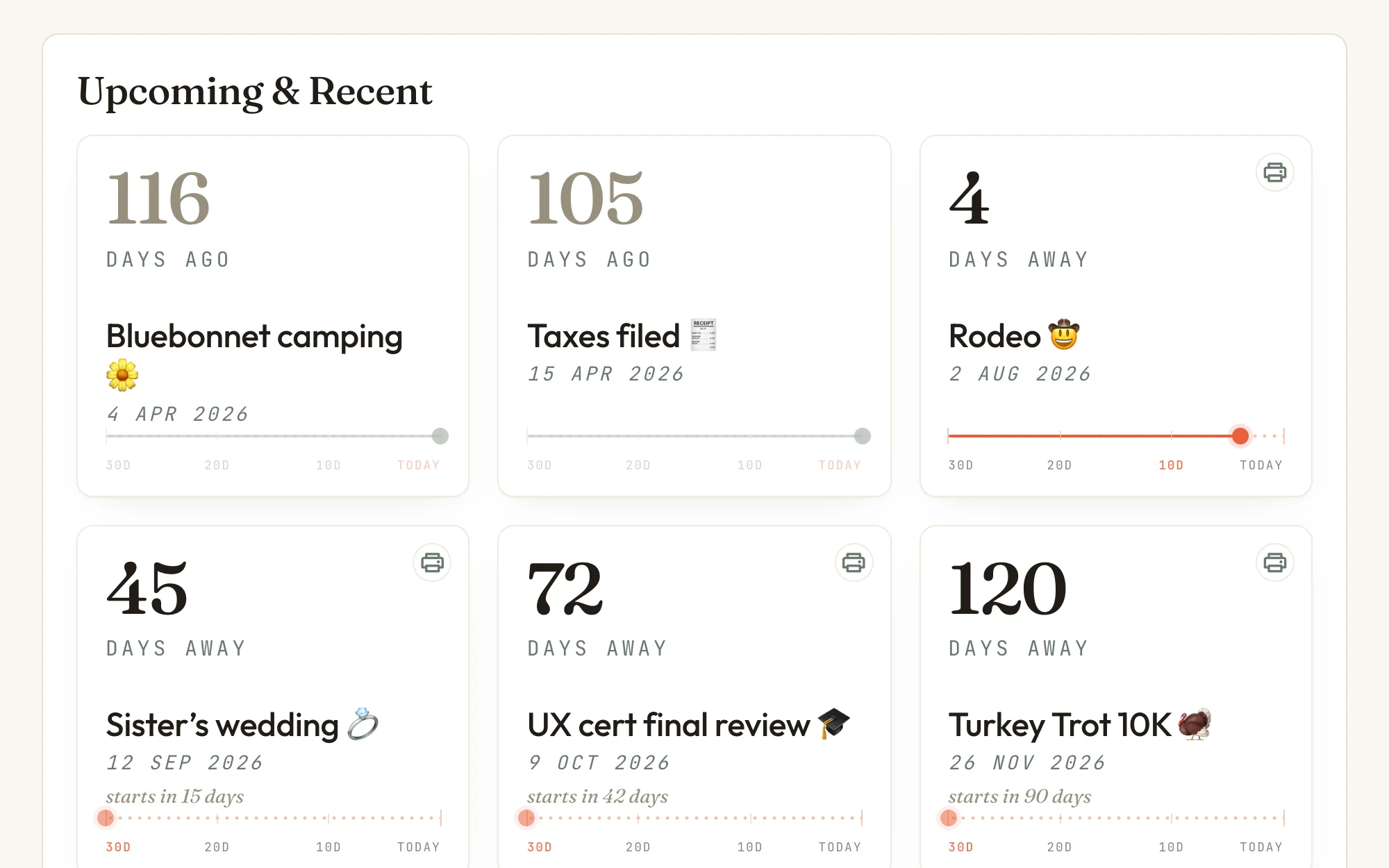
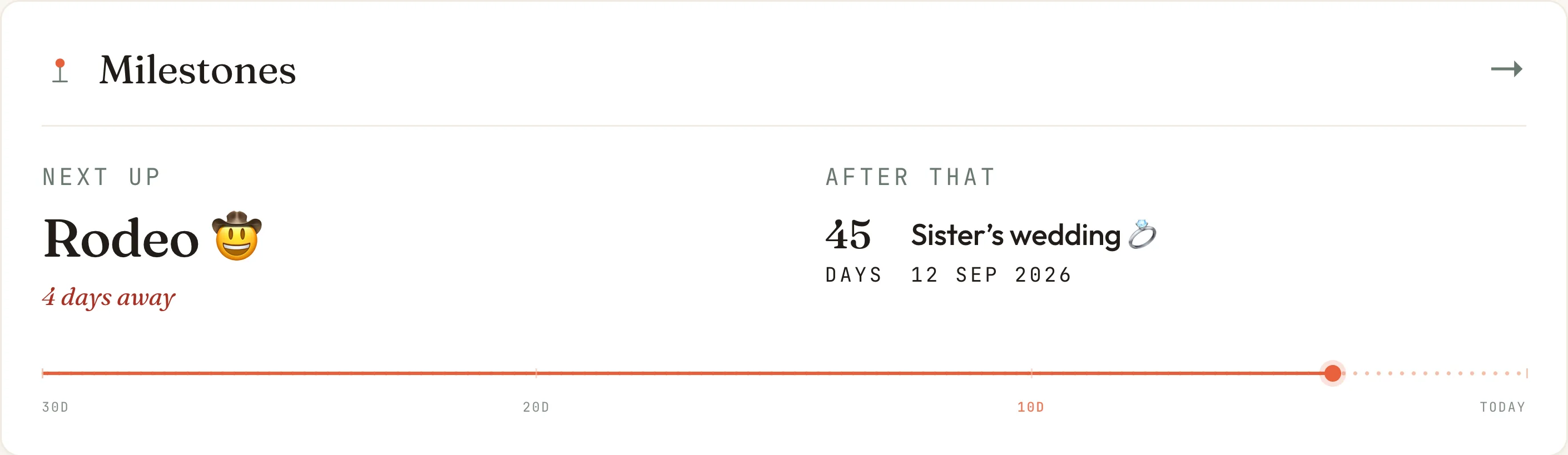
Add a named event and a date. The year-grid renders it in context, and the countdown wakes up thirty days out — urgency arrives when it’s useful.
No linked tasks, no project phases, no reminders. Just the shape of the year, held in one place.
Mood
The inner weather.
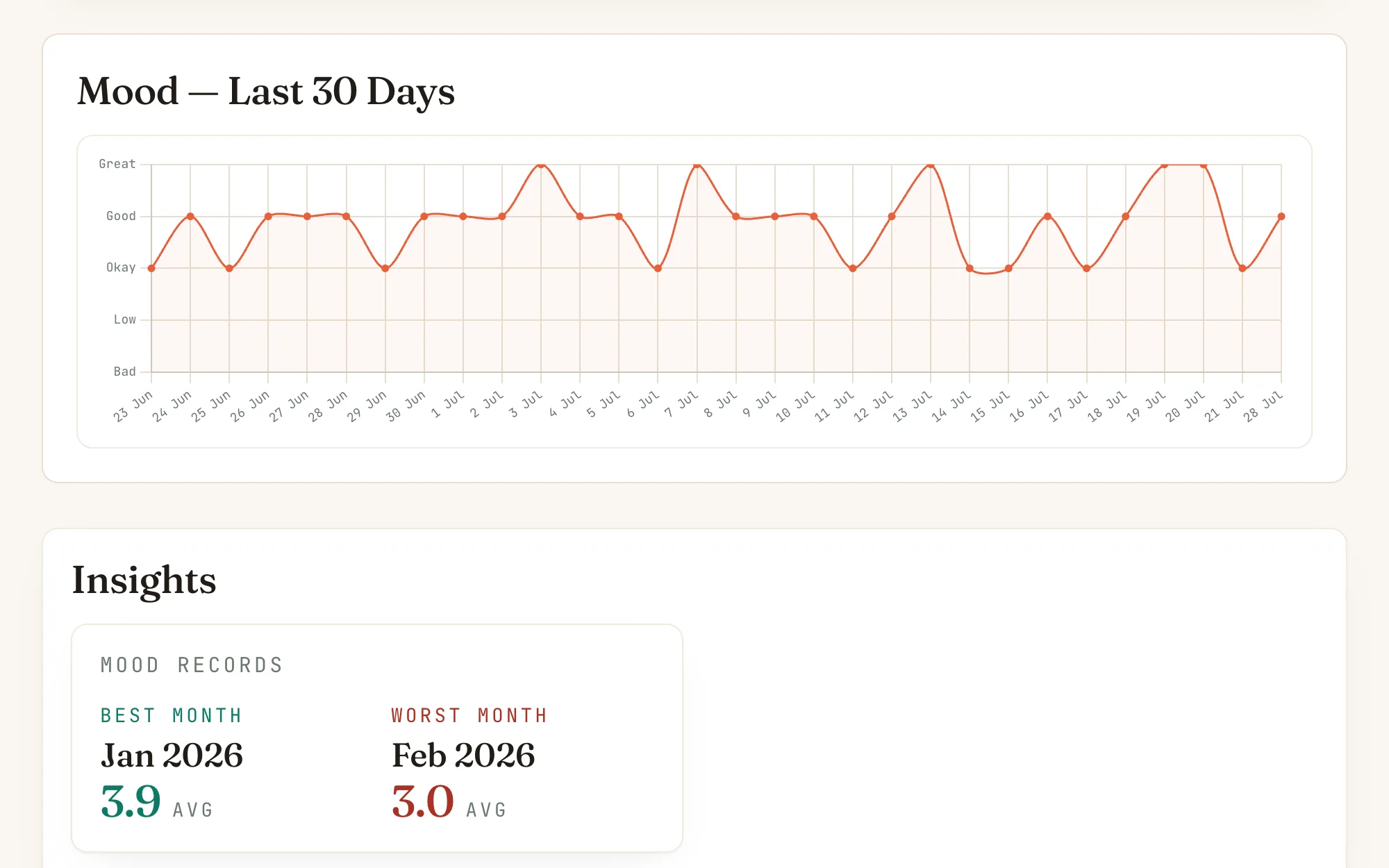
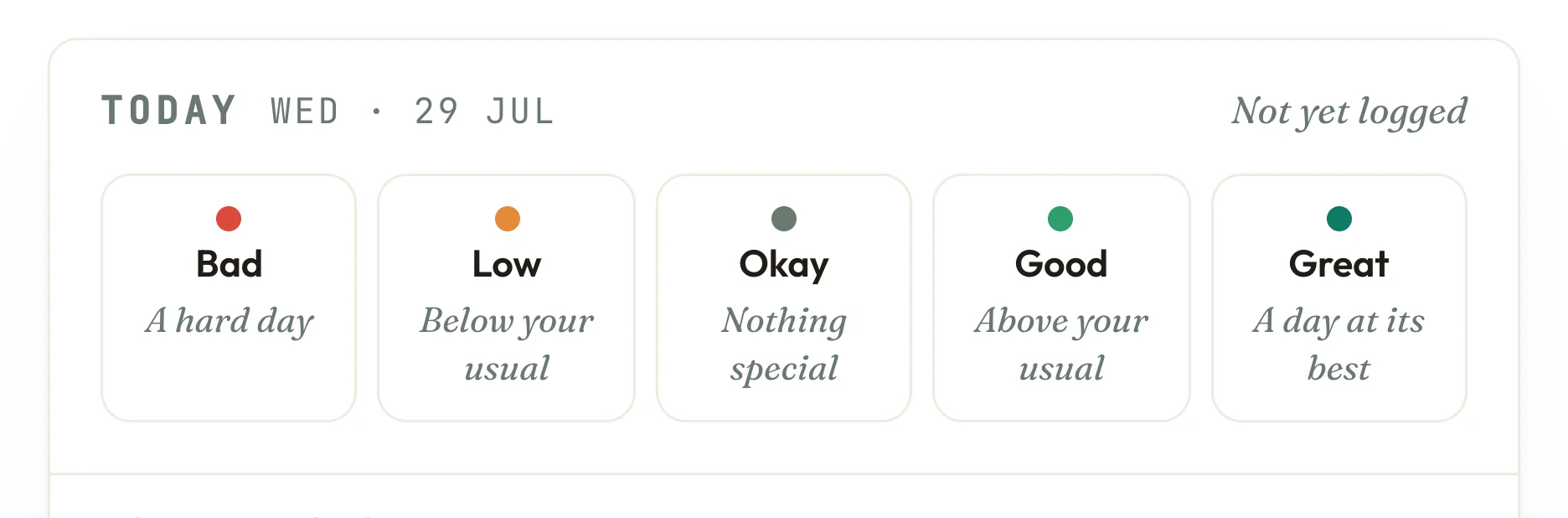
Feelings arrive at full volume and unlabelled — and unlabelled, they steer. Naming one is the first act of steering it.
At the end of the day you tap one of five bands: Bad, Low, Okay, Good, Great. That is the whole practice — no prompts, no reason required, no streak.
A run of bad days is information, not failure. Over weeks the page reads the pattern back: the last thirty days as a line, which months carried you.
Journal
The sentences worth keeping.
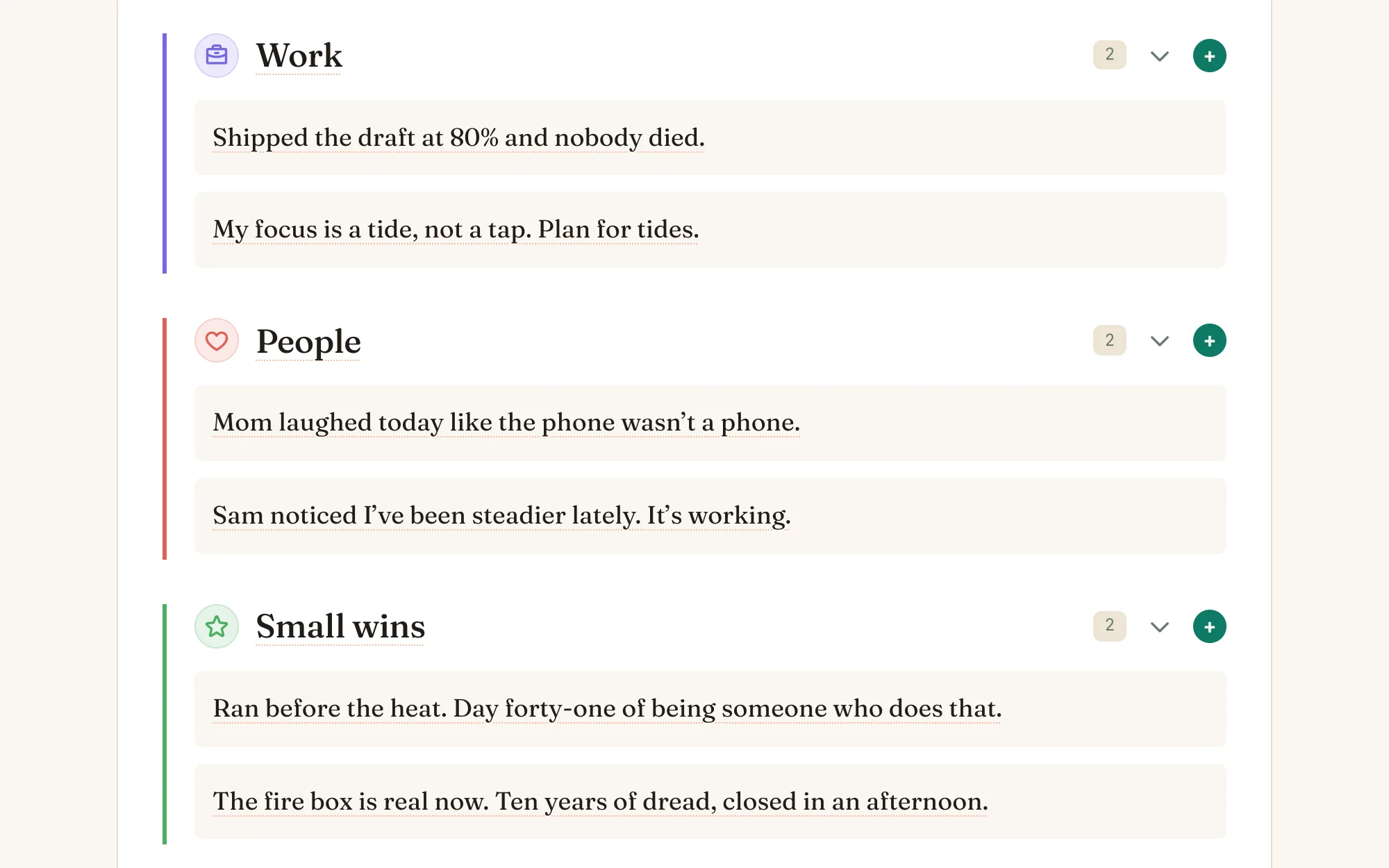
A noisy mind thinks in loops. Written down, a thought stops being you and becomes something you can look at.
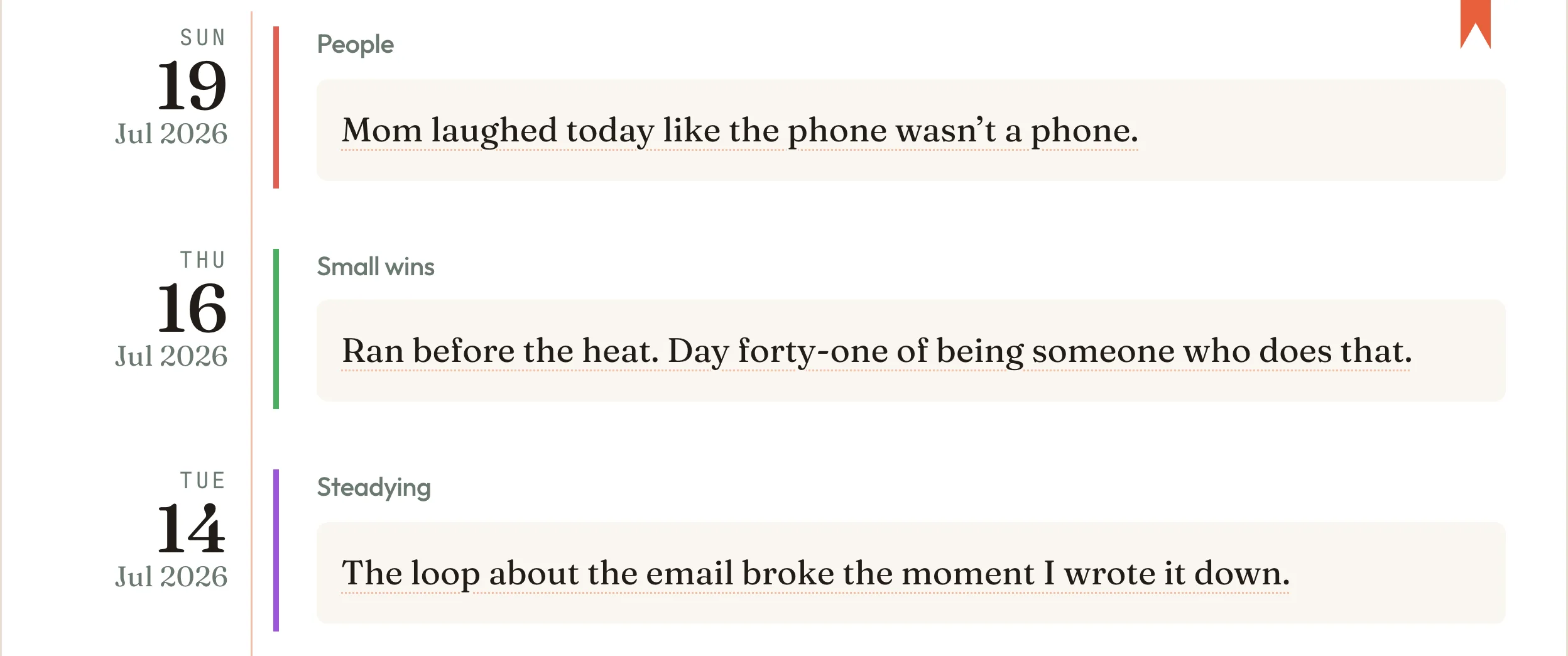
Journal takes one sentence at a time, filed under a category you invent. Add a date and it becomes a diary entry; leave it off and it stays a timeless phrase. One toggle re-reads everything by category or by date.
Up to eleven categories and a thousand sentences. No prompts, no AI summaries. The sentence stays as written.
Sparks
What I did, and what it actually gave me.
At 9am you can ask whether reading is worth it, but the answer comes from the part of you least able to judge it. Sparks keeps the record instead, so which activities pay you back stops being a guess and becomes something you look up.
Write what you did in eighty characters, then rate it on four scales that routinely disagree: how much you enjoyed it, how worthwhile it felt, how it left you afterwards, and how wound up it left your system. Scrolling can be a 7 for pleasure and a 1 for mastery; a tax form can be a 2 and an 8. Energy afterwards is the one scale that runs negative, because something pleasant can still leave you worse off than it found you.
You can also log what you expect before you start, behind an “I guessed first” box — an expectation reconstructed afterwards tells you nothing. Then Guess vs Experience names what beats your forecast and what never does, and What Pays You Back ranks your own activities by what they returned. Behavioral activation, with the receipts kept.
Small Returns
My Sparks
Read 30 min
- You guessed3
- Pleasure6
- Mastery8
- Energy afterwards+2
Daily Routine
The shape I want the day to hold.
A calendar can tell you where to be. It can’t tell you what kind of day you were trying to have — and that is usually the first thing to go missing. Daily Routine is not a calendar and not a scheduler. It is a shape you lean on.
You build the day out of blocks, and each block takes only as much precision as it deserves: exact (08:00–10:00), flexible (around 8am), or duration only (90 minutes, sometime in the morning). Most days mix all three. Shapes are reusable — Work Day, Recovery Day, Low Energy Day — and each weekday points at one under a theme name you write yourself: Creation, Clients, Learning. Nothing is prescribed — the shapes are yours to name and rewrite.
Blocks carry the energy you expect to have, and the page draws the day’s energy shape as a single strip — so you can build around the hours you’re actually sharp instead of treating every hour as identical. Then you live against it. One optional Big Move names the outcome that would make the day count. Blocks get marked Done, Partly, Skipped or Moved — skipping and moving are supported actions, not failures, and a block you never marked isn’t counted against you. A one-minute check-in closes the day: five dials and two optional lines.
The Routine Score deliberately ignores how productive you rated the day. Count productive hours and you have built a busyness meter. It weighs whether the blocks that mattered happened, whether the Big Move landed, whether the recovery you scheduled actually happened, and how the day felt — so a packed day can score badly and a light, recovered, enjoyable one can score well. Beside it sits a Sustainability read, asking whether you could do this again tomorrow, and it is free to disagree: a high-scoring day that drained you still reads Pushed too hard. It is a personal self-tracking number, not a validated measure of anything — and like every report here, it is only as good as how regularly you log.
Day Shape
My Routine
Design a day that works for you.
- 08:00Deep work · exact
- ~5pmExercise · flexible
- 90mWind down · duration only